



What Are the Correct Names of the Parts of a Classical Guitar
Let’s explore what the instrument is made of so that you better understand how custom guitars are made and why they are so highly valued!
Every part of the guitar—from materials to construction—plays an important role in its sound, playability, and longevity. Understanding the structure helps you not only appreciate its value more, but also make a more informed choice.
Every part of the guitar—from materials to construction—plays an important role in its sound, playability, and longevity. Understanding the structure helps you not only appreciate its value more, but also make a more informed choice.
NECK
Headstock
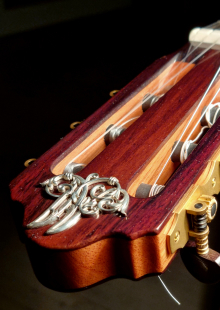
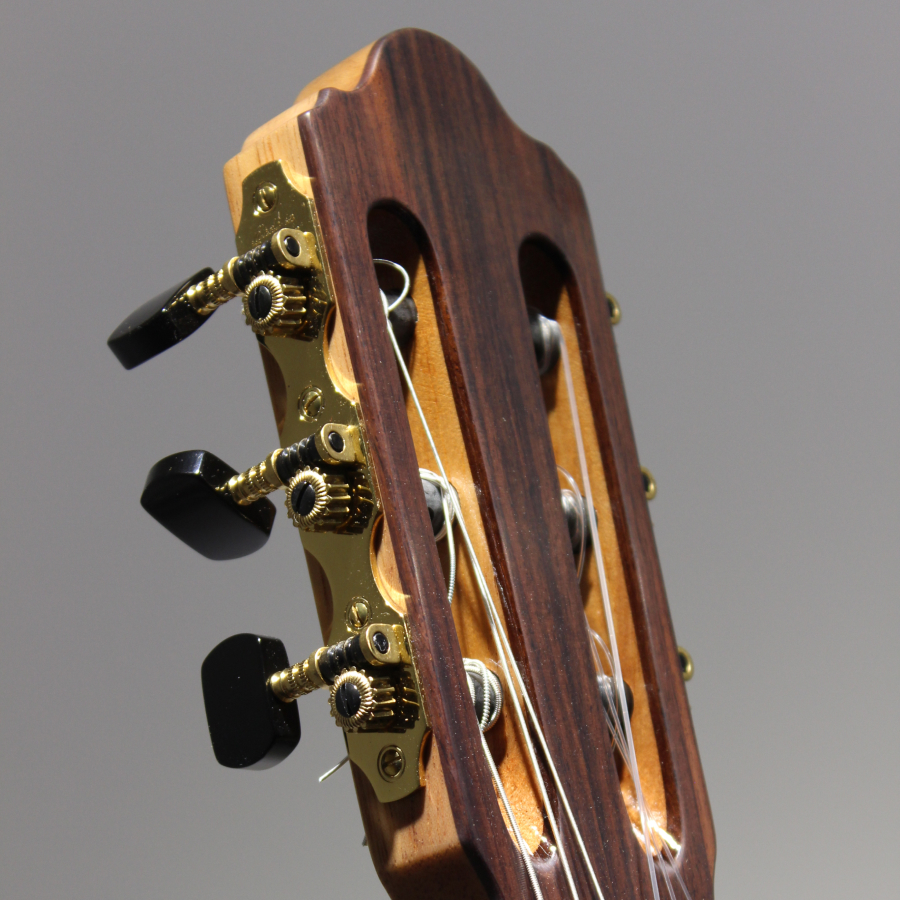
The topmost element of any guitar serves as the base for the tuning mechanism and gives the instrument its character. It’s often adorned with carvings, inlays, or the luthier’s logo. Its primary function is to hold the tuning machines, which are responsible for string tension and precise tuning, directly affecting the sound.
Nut
This small yet crucial component sits between the headstock and the first fret. The nut determines the length of the vibrating part of the string and transmits its vibrations, affecting the clarity of the guitar’s tone.
Scale Length (Mensura)
Scale length is the distance between the nut and the bridge (the vibrating part of the string). It plays a key role in shaping the guitar’s sound. The standard is 650 mm, though it can vary depending on the instrument, which influences both playability and tone.
Neck, Fingerboard, and Frets
The neck is the main body to which the fingerboard—typically made of a hard wood like ebony or rosewood—is glued. Frets are the thin metal strips embedded into the fingerboard. Together, they provide the playable surface, enabling the guitarist to produce notes of different pitches.
Heel (Neck Heel)
The part of the neck that widens and attaches to the guitar body. In classical guitars, this is usually a fixed (glued) joint, though bolt-on necks do exist.
BODY
Back (Lower Soundboard)
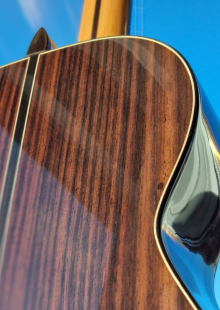
This is the rear part of the guitar’s body and plays a role in reflecting sound inside the instrument. The material used affects the depth and richness of the guitar’s tone.
Sides (Ribs)
These are the strips that connect the top and back plates, forming the sides of the guitar’s body. The width of the sides determines the volume of the resonating chamber, and thus the instrument’s tonal range—wider sides tend to produce more bass, whereas narrower ones result in a brighter, higher-frequency sound.
Top (Upper Soundboard)
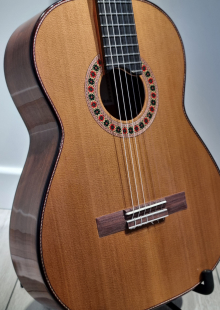
The heart of the guitar, responsible for much of its tone. Usually made from spruce (for bright, clear sound) or cedar (for a warmer, softer tone). It’s also often decorated around the soundhole with intricate inlays.
Soundhole and Rosette
The soundhole, often called the “rosette", is located on the top plate and helps amplify and direct the sound. The decorative inlay around it—not the hole itself—is the true rosette, often featuring elaborate designs that give the instrument a unique look.
Bridge
The bridge is the part on the top plate that anchors the strings. The saddle, located on the bridge, fixes the strings and transfers their vibrations to the top plate. Bridges are typically made of rosewood, combining both durability and aesthetic appeal.
That’s a brief tour through the parts of a classical guitar! Now you know that each component plays a role in the guitar’s sound, comfort, and aesthetics.
That’s a brief tour through the parts of a classical guitar! Now you know that each component plays a role in the guitar’s sound, comfort, and aesthetics.
If you would like to purchase a handcrafted classical guitar, please fill out the feedback form, and I will be happy to get in touch with you. Based on your preferences and requirements, I will prepare an individual cost estimate for an instrument that will suit you perfectly.